Raja Ampat Diving Yacht Compressor and Dive Deck
As Ahmad Rizali, with over a decade immersed in the intricacies of the Indonesian phinisi market and as a proud member of IYBA, I understand the discerning diver’s priorities. When considering a voyage among the pristine waters of Raja Ampat, the quality of your diving yacht’s compressor and the functionality of its dive deck are not mere amenities; they are foundational to safety, comfort, and the overall enjoyment of your expedition. These critical components dictate the reliability of your air supply and the efficiency of your dive operations, ensuring every descent into Raja Ampat’s vibrant reefs is seamless and secure. For those seeking premium Raja Ampat yachts, scrutinizing these aspects is a prudent first step.
The Unseen Foundation: Why Reliable Air is Paramount
The very essence of a safe and enjoyable dive experience hinges upon the quality and reliability of your breathing gas. In the remote, breathtaking archipelago of Raja Ampat, where shore-based infrastructure is minimal, your liveaboard yacht becomes a self-sufficient diving platform. The onboard compressor system is, quite literally, the heart of this operation. Any compromise in its performance, maintenance, or air purity can have significant implications, ranging from discomfort to serious health risks.
As a broker, I consistently advise clients that a yacht’s investment in a top-tier compressor and rigorous maintenance protocols speaks volumes about its commitment to diver safety and guest satisfaction. An unreliable compressor can lead to delayed dives, interrupted itineraries, or, worse, compromise air quality. The premium experience expected from Raja Ampat yachts necessitates an uncompromising stance on air supply, ensuring that every cylinder filled is done so with clean, dry, and safe breathing gas, allowing divers to focus solely on the unparalleled beauty beneath the surface.
The Engine of Your Dive: Compressor Systems Aboard Raja Ampat Yachts
The choice of compressor system aboard a liveaboard is a critical decision influencing efficiency, reliability, and ultimately, the guest experience. Several reputable manufacturers dominate the market, each offering distinct advantages. Understanding these differences can aid in selecting the ideal vessel for your dive expedition.
Bauer Compressors: The Industry Standard
Bauer Kompressoren from Germany is arguably the most recognized and trusted name in high-pressure breathing air systems globally. Their units are renowned for their robustness, longevity, and consistent performance under demanding conditions. On many Raja Ampat yachts, you will find Bauer units such as the Capitano, Poseidon, or Mariner series. These compressors are built for continuous operation, offering:
- High Capacity: Capable of filling multiple cylinders rapidly, minimizing wait times between dives.
- Durability: Engineered for marine environments, with corrosion-resistant components.
- Reliability: A long-standing reputation for minimal breakdowns when properly maintained.
- Global Service Network: Easier access to parts and specialized technicians, even in remote regions.
Bauer compressors often feature advanced filtration stages and automatic condensate drains, contributing significantly to air quality and ease of operation.
Coltri Sub Compressors: Compact and Efficient
Hailing from Italy, Coltri Sub offers a range of compressors known for their compact design, efficiency, and relatively lighter footprint. While perhaps less ubiquitous on the largest liveaboards, Coltri units are frequently found on smaller phinisis or as reliable backup systems. Their advantages include:
- Space Efficiency: Ideal for vessels with limited engine room space.
- Portability: Some models are highly portable, useful for specialized operations.
- Cost-Effectiveness: Often a more economical choice without significant compromise on quality for moderate use.
Coltri compressors, like Bauer, incorporate multi-stage filtration to ensure breathing air meets stringent safety standards.
L&W (Lenhardt & Wagner) Compressors: High-Performance Specialists
Another German manufacturer, L&W, specializes in high-capacity industrial and breathing air compressors. These units are often found on larger, more luxurious Raja Ampat yachts that anticipate high dive volumes and demand continuous, high-speed filling capabilities. Key features include:
- Very High Output: Designed for rapid filling of numerous tanks, perfect for large groups or extensive diving schedules.
- Quiet Operation: Often engineered for lower noise levels, enhancing guest comfort onboard.
- Advanced Technology: Incorporate sophisticated control systems and robust components for long-term, heavy-duty use.
Regardless of the brand, a diligent operator will ensure their compressors are sized appropriately for the vessel’s capacity, regularly serviced, and meticulously monitored for performance and air quality. A compressor’s Cubic Feet per Minute (CFM) or Liters per minute (L/min) output, along with its maximum pressure rating (typically 200 or 300 bar), are key specifications to consider.
Table 1: Common Dive Compressor Brands & Characteristics on Raja Ampat Yachts
| Brand | Key Features | Best Suited For |
|---|---|---|
| Bauer | Robust, highly reliable, widely used, various capacities, global support. | General liveaboards, high-demand operations, premium vessels. |
| Coltri Sub | Compact, efficient, portable options, good as backup or for smaller vessels. | Smaller phinisis, backup systems, budget-conscious operations. |
| L&W (Lenhardt & Wagner) | Very high capacity, continuous duty, quiet operation, advanced controls. | Larger luxury liveaboards, demanding dive schedules, high volume. |
Ensuring Purity: Filtration Systems and Air Quality Standards
The most powerful compressor is useless without an equally robust filtration system. Breathing compressed air at depth demands absolute purity. Contaminants like oil vapor, moisture, carbon monoxide (CO), or carbon dioxide (CO2) can lead to serious health issues, including headaches, nausea, or even unconsciousness underwater. Therefore, a multi-stage filtration system is non-negotiable.
Standard filtration systems on quality compressors typically include:
- Particulate Filters: To remove dust, rust, and other solid particles.
- Oil Separators: To eliminate oil aerosols and vapors, crucial as compressors use oil for lubrication.
- Moisture Separators (Desiccant Filters): Using molecular sieves or similar materials to absorb water vapor, preventing rust in tanks and “dry mouth” for divers.
- Activated Carbon Filters: To absorb odors and tastes, ensuring the air is neutral and pleasant to breathe.
Reputable operators perform regular air quality tests to ensure their breathing gas meets international standards such as EN12021 for breathable compressed air. This involves testing for CO, CO2, O2 content, oil mist, and moisture levels. Always inquire about a yacht’s air testing protocols and ask to see recent reports if you have concerns. A commitment to these rigorous checks is a hallmark of a truly premium diving experience in Raja Ampat.
Extending Your Bottom Time: Nitrox Systems
For many divers, the availability of Nitrox (Enriched Air Nitrox, EANx) is a significant advantage. Nitrox, which contains a higher percentage of oxygen and a lower percentage of nitrogen than standard air, allows for extended no-decompression limits and can reduce post-dive fatigue, making it ideal for multi-day liveaboard trips with multiple dives per day. Most serious divers exploring Raja Ampat will appreciate this option.
There are two primary methods for producing Nitrox onboard:
1. Partial Pressure Blending
This traditional method involves adding pure oxygen to a cylinder, then topping it off with air from the compressor. This requires oxygen-clean cylinders and meticulous attention to detail, as incorrect blending can be dangerous. It demands a highly trained crew member to perform the blending safely and accurately. Divers must also analyze their own tanks to verify the oxygen percentage before each dive.
2. Membrane Systems
Increasingly popular on modern liveaboards, membrane systems offer a safer and more efficient way to produce Nitrox. Air is passed through a semi-permeable membrane that preferentially separates nitrogen molecules, allowing a higher concentration of oxygen to pass through. This enriched air is then compressed and stored. Advantages of membrane systems include:
- Continuous Flow: Can produce Nitrox continuously, often directly feeding the compressor.
- Enhanced Safety: Reduces the risk associated with handling pure oxygen.
- Simplicity: Less labor-intensive than partial pressure blending.
- Consistency: Provides a more consistent blend (typically EANx32 or EANx36).
Regardless of the method, proper safety protocols are paramount. All divers using Nitrox must be certified, and rigorous procedures for oxygen analysis, cylinder labeling, and log-keeping should be in place. While Nitrox is often offered at an additional cost, its benefits for maximizing your dive experience in Raja Ampat are considerable.
The Hub of Activity: Designing the Optimal Dive Deck
Beyond the hidden mechanics of air production, the dive deck is the visible heart of your underwater adventure. A well-designed dive deck significantly enhances comfort, safety, and efficiency, transforming the often-clumsy process of gearing up into a smooth operation. When evaluating Raja Ampat yachts, the dive deck deserves close inspection.
Space and Flow
Ample space is crucial. Divers, especially those with extensive camera gear, need room to maneuver, sit, and prepare their equipment without bumping into others. A logical flow from gear storage to the entry point and back to rinse tanks minimizes congestion and frustration. Wide gangways and clear pathways are indicative of thoughtful design.
Individual Gear Stations
The best dive decks feature individual stations for each diver, complete with a bench, under-seat storage for personal items, and dedicated spots for cylinders. This provides a sense of personal space, keeps gear organized, and prevents mix-ups. Convenient hooks for BCDs and regulators are also a plus.
Rinse Tanks
Multiple, clearly labeled rinse tanks are essential. There should be separate tanks for:
- General Gear: For BCDs, fins, masks.
- Regulators: Often requiring fresh, clean water without contamination from other gear.
- Dedicated Camera Rinse Tanks: The most critical, these should be large, filled with fresh water, and ideally separate from all other gear to protect delicate camera equipment from scratches or contaminants.
Regular refreshing of rinse tank water by the crew is also a sign of good hygiene practices.
Dedicated Camera Stations
Raja Ampat is a photographer’s paradise, making dedicated camera facilities a non-negotiable feature for many. These stations should include:
- Work Benches: Padded surfaces for assembling and disassembling camera housings.
- Charging Points: Ample, easily accessible power outlets (universal or specific to common international standards) for batteries.
- Air Guns: For drying camera equipment and blowing dust.
- Soft Towels: Readily available for delicate drying.
- Secure Storage: Shelves or drawers for lenses, strobes, and other accessories.
A well-appointed camera station protects valuable equipment and simplifies the photographic process.
Robust Dive Tenders (RIBs)
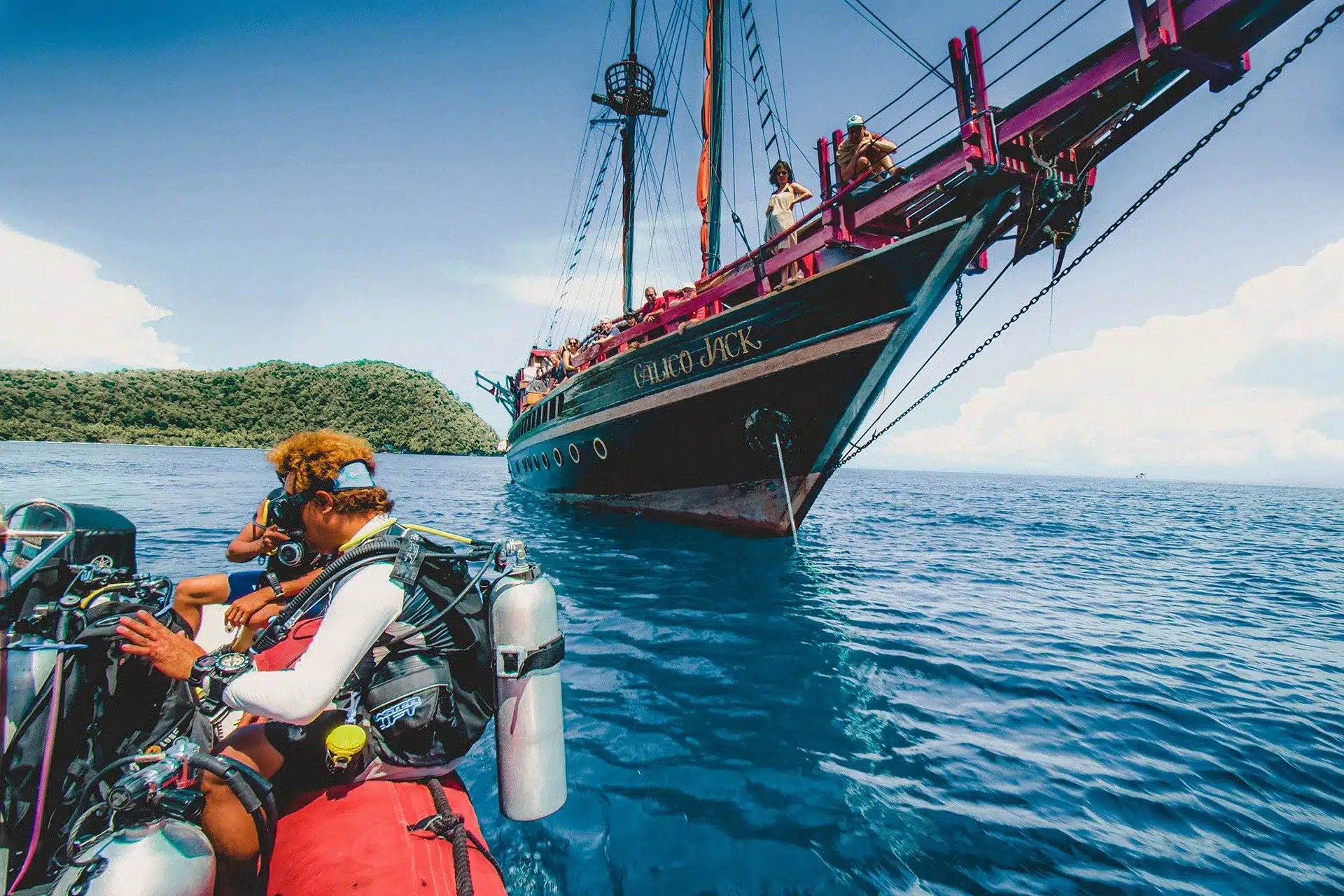
Most dives in Raja Ampat are conducted from tenders (Rigid Inflatable Boats or RIBs) that transport divers from the main yacht to the dive site. These tenders must be:
- Sturdy and Stable: Capable of handling choppy water and providing a stable platform for gearing up.
- Fast: To minimize travel time to and from dive sites.
- Equipped with Easy Re-Entry Ladders: Designed for divers in full gear, often with fins on.
- Capacious: Sufficient space for divers and their gear, with clear pathways.
- Piloted by Experienced Drivers: Who understand diver needs and can position the boat safely for entry and exit.
Emergency Equipment
A comprehensive dive deck will always have readily accessible emergency equipment, including:
- Emergency Oxygen: Medical-grade oxygen with demand valves and masks.
- First Aid Kit: Well-stocked and regularly checked.
- Emergency Communication: Radios, satellite phones, or other means to contact external assistance.
- Life Rings and Rescue Equipment: For immediate response to surface incidents.
Shade and Seating
Between dives, divers often appreciate shaded areas and comfortable seating on the dive deck. This allows for relaxation, debriefing, and preparation for the next dive, protected from the tropical sun.
Table 2: Essential Dive Deck Features for a Premium Experience
| Feature | Importance | Benefits |
|---|---|---|
| Ample Gearing Space | Comfort & Safety | Prevents crowding, easier preparation, reduces stress. |
| Dedicated Camera Station | Protection & Convenience | Secure charging, proper cleaning, dedicated workspace for sensitive gear. |
| Multiple Freshwater Rinse Tanks | Gear Longevity & Hygiene | Separate for sensitive equipment (cameras, regs), prevents cross-contamination. |
| Robust Dive Tenders (RIBs) | Efficient & Safe Transfers | Quick deployment, easy re-entry, sturdy in swell, experienced drivers. |
| Individual Gear Storage | Organization & Security | Personal space, prevents mix-ups, keeps deck tidy. |
| Emergency Oxygen & First Aid | Critical Safety | Immediate response for dive emergencies, crew trained in administration. |
| Shaded Seating | Comfort & Relaxation | Protection from sun, comfortable spot for debriefing and resting. |
Beyond Machinery: Safety Protocols and Crew Expertise
Even the most advanced equipment is only as good as the people operating and maintaining it. A premium Raja Ampat diving experience relies heavily on stringent safety protocols and the expertise of the crew. This human element is often what truly distinguishes one liveaboard from another.
Routine Maintenance and Logging
Responsible operators adhere to rigorous maintenance schedules for all dive equipment, especially compressors. This includes daily pre-operation checks, regular filter changes (often more frequently than manufacturer recommendations given the tropical humidity), weekly inspections, and annual major servicing by certified technicians. Detailed logbooks should record every hour of compressor operation, filter changes, and service events. This meticulous approach ensures consistent performance and early detection of potential issues.
Emergency Preparedness
A comprehensive Emergency Action Plan (EAP) is vital. This plan outlines procedures for various dive emergencies, from lost divers to decompression sickness. Key elements include:
- Trained Crew: All dive crew members should be certified in first aid, CPR, and emergency oxygen administration.
- Oxygen Provision: Ample medical-grade oxygen should be available on the main yacht and tenders.
- Communication Systems: Reliable means to contact emergency services or a recompression chamber, however distant.
- Emergency Drills: Regular practice drills ensure the crew can respond effectively under pressure.
Experienced Dive Guides
The quality of your dive guides profoundly impacts your experience. In Raja Ampat, local knowledge is invaluable. Experienced guides understand the currents, marine life behaviors, and topography of dive sites, leading you to the best encounters while prioritizing safety. Look for guides with:
- Extensive Local Knowledge: Familiarity with the specific dive sites, entry/exit points, and potential hazards.
- Safety Focus: Adherence to safe diving practices, clear briefings, and vigilant underwater supervision.
- Marine Biology Knowledge: Enhancing your understanding of the incredible biodiversity.
- Appropriate Diver-to-Guide Ratio: A lower ratio (e.g., 4:1 or 5:1) ensures personalized attention and enhanced safety.
Selecting Your Ideal Raja Ampat Dive Yacht
As you plan your expedition to the unparalleled diving grounds of Raja Ampat, the details surrounding the compressor and dive deck should be central to your decision-making process. These are not